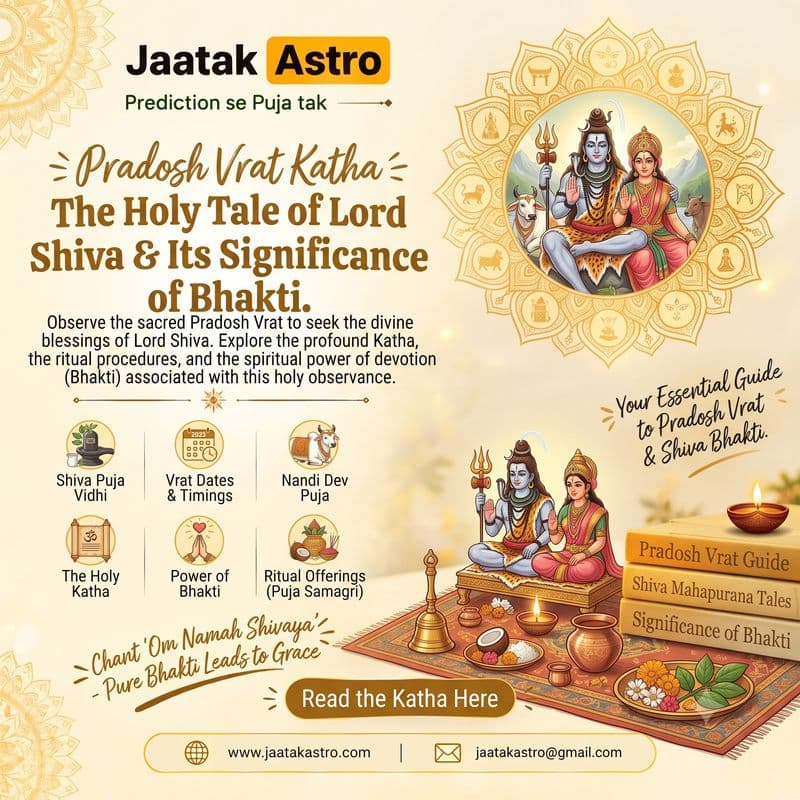
What Is Pradosh Vrat?
Pradosh Vrat is one of the most revered fasting traditions dedicated to Lord Shiva. It is observed on the Trayodashi Tithi, the thirteenth day of the waxing or waning phase of the Moon. The word Pradosh refers to the evening period around sunset, which is considered especially sacred for worshipping Lord Shiva.
Devotees observe the vrat with faith and spend the day in prayer, meditation, and remembrance of Shiva. In the evening, they perform Pradosh Puja and listen to or read the Pradosh Vrat Katha.
The vrat is traditionally believed to bring peace, remove obstacles, and inspire devotees to live with greater faith and devotion.
Pradosh Vrat Katha
According to a popular traditional Pradosh Vrat Katha, there was once a poor Brahmin woman who was a devoted worshipper of Lord Shiva.
She lived a difficult life and had very few resources. Despite her poverty, she never allowed her circumstances to weaken her faith. Every day, she remembered Lord Shiva and tried to offer whatever she could with a sincere heart.
The woman had a son who was also devoted to Shiva. One day, while travelling, the boy came across a group of sages and learned about the importance of observing Pradosh Vrat.
The sages explained that the evening of Pradosh is particularly dear to Lord Shiva and that devotees who observe the vrat with a pure heart and sincere devotion receive the grace of Mahadev.
The boy returned home and told his mother what he had learned.
The mother decided to observe the Pradosh Vrat despite her difficult circumstances. She had very little food and almost nothing to offer during the puja, but she did not let that stop her.
On the day of Pradosh, she kept the fast and spent the day remembering Lord Shiva. In the evening, she cleaned the place of worship and offered simple prayers.
She had no expensive offerings or elaborate arrangements. All she had was faith.
With devotion, she prayed to Lord Shiva and Goddess Parvati and asked for their blessings.
Lord Shiva Tests Their Devotion
As the story goes, Lord Shiva wished to test the family's devotion.
The poor Brahmin woman continued her prayers without expecting wealth or comfort in return. Her only wish was to remain devoted to Mahadev and receive His blessings.
Her sincere devotion pleased Lord Shiva.
By the grace of Mahadev, the family's difficult circumstances gradually changed. Their suffering began to decrease, and they received opportunities that helped them improve their lives.
The story teaches that devotion is not measured by the amount of wealth a person possesses or the grandeur of an offering. What matters most is the sincerity behind the prayer.
Lord Shiva is known as Bholenath, the simple and compassionate Lord who accepts even the smallest offering when it is made with genuine love and faith.
Another Traditional Story Associated With Pradosh Vrat
Another popular version of the Pradosh Vrat Katha tells of a king who faced severe difficulties in his kingdom.
The king had lost his prosperity and was surrounded by problems. Seeking a solution, he approached wise sages and asked them for guidance.
The sages advised him to observe Pradosh Vrat and worship Lord Shiva with complete devotion.
The king followed their advice. He observed the fast, performed Shiva Puja during Pradosh Kaal, and listened to the sacred story.
With time, his difficulties began to ease.
The story is traditionally remembered to highlight the spiritual importance of Pradosh Vrat and the belief that sincere worship of Lord Shiva can give devotees strength during challenging periods of life.
Spiritual Significance of Pradosh Vrat
Pradosh Vrat is more than simply a day of fasting.
For many devotees, it is a day to slow down, turn inward, and remember Lord Shiva. The vrat encourages self-discipline, prayer, patience, and gratitude.
The evening Pradosh period is considered especially auspicious for Shiva worship. Devotees visit temples, offer water and milk to the Shiva Lingam, chant Shiva mantras, and perform prayers.
Some devotees also read the Shiv Chalisa, Shiva Purana passages, or Pradosh Vrat Katha as part of their worship.
How Is Pradosh Vrat Observed?
The exact customs can vary between families and regions, but a typical Pradosh Vrat may include the following practices:
- Take a morning bath and make a sincere sankalp to observe the vrat.
- Keep a fast according to your health and family tradition.
- Spend time in prayer and remember Lord Shiva throughout the day.
- In the evening, clean the puja area and prepare for Shiva worship.
- Offer traditional items such as water, milk, bilva leaves, flowers, and fruits, according to your tradition.
- Chant Om Namah Shivaya with devotion.
- Listen to or read the Pradosh Vrat Katha.
- Perform the evening aarti and offer your prayers to Lord Shiva and Goddess Parvati.
- Break the fast according to your family's customary practice.
People who are unable to observe a complete fast may follow a simpler form of vrat according to their health, age, and personal circumstances.
Why Are Bilva Leaves Offered to Lord Shiva?
Bilva leaves hold a special place in Shiva worship.
Devotees traditionally offer fresh bilva leaves to the Shiva Lingam while chanting Lord Shiva's name. The three leaflets are often associated with different spiritual meanings and are considered an important part of traditional Shiva Puja.
The offering is simple, but it carries deep devotional significance.
The Main Lesson of Pradosh Vrat Katha
The heart of the Pradosh Vrat Katha is simple: true devotion comes from the heart.
A person does not need wealth, elaborate rituals, or expensive offerings to remember God. A sincere prayer offered with faith is considered valuable.
The story also reminds us that difficult times do not last forever. Patience, faith, self-discipline, and devotion can give a person the inner strength to face life's challenges.
For devotees of Lord Shiva, Pradosh Vrat is therefore both a religious observance and an opportunity for spiritual reflection.
Pradosh Vrat Mantra
One of the most commonly chanted mantras during Pradosh worship is:
Om Namah Shivaya
Devotees may chant this mantra while performing puja, meditating, or simply remembering Lord Shiva during the day.
Frequently Asked Questions About Pradosh Vrat
What is Pradosh Vrat?
Pradosh Vrat is a Hindu fasting and worship tradition dedicated to Lord Shiva. It is observed on Trayodashi Tithi, particularly during the evening Pradosh period.
Who can observe Pradosh Vrat?
Anyone who wishes to worship Lord Shiva may observe Pradosh Vrat according to their personal faith, health, and family tradition. Children, elderly people, and those with health concerns should not undertake a difficult fast without appropriate guidance.
Can Pradosh Vrat be observed without fasting?
Yes. Devotion and prayer are central to the observance. People who cannot fast may choose a simpler form of worship according to their circumstances and traditions.
What should I read during Pradosh Vrat?
Devotees commonly read or listen to the Pradosh Vrat Katha and may also recite Shiva-related prayers, mantras, or devotional texts.
Which mantra is commonly chanted during Pradosh Vrat?
Om Namah Shivaya is one of the most widely used mantras in Lord Shiva worship.
Conclusion
Pradosh Vrat is a beautiful tradition that brings devotees closer to Lord Shiva through fasting, prayer, and remembrance.
The Pradosh Vrat Katha reminds us that sincere devotion does not depend on wealth or elaborate rituals. Even a simple prayer offered with a pure heart has a special place in Hindu devotional tradition.
On Pradosh, devotees turn their attention toward Mahadev, seek His blessings, and pray for peace, strength, and spiritual well-being.
Har Har Mahadev!
