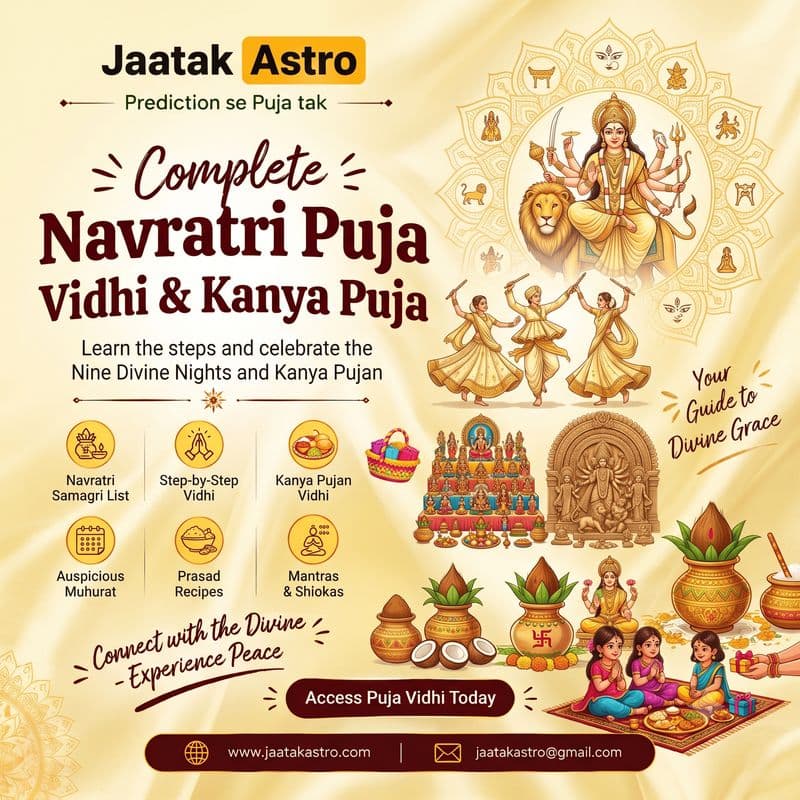
Navratri Puja Vidhi and Kanya Puja
Get acquainted with the tradition of celebrating Navratri Puja and learn about the importance of Kalash Sthapana, daily worship, and Kanya Puja. Know more about the necessary Puja Samagri, the process of worshipping during Navratri, and the reason behind worshipping young girls on Ashtami/Navami.
Navratri Festival
Navratri is one of the most significant festivals dedicated to Goddess Durga. Devotees worship Maa Durga in her various forms for nine days and observe fasting according to their family and regional traditions.
Kanya Puja is another important aspect of Navratri, particularly in many North Indian families. Young girls are worshipped with respect on Ashtami or Navami and served traditional food as an offering.
What is Navratri Puja?
Navratri Puja is the worship of the nine forms of Goddess Durga during the nine holy nights of Navratri. The ritual generally begins with Kalash Sthapana and continues throughout the nine days.
The exact rituals may differ according to family traditions and regional customs. However, the main objective remains the same—to express devotion towards Maa Durga and seek her blessings for strength, peace, prosperity, happiness, and well-being.
Nine Forms of Goddess Durga
During Navratri, the following nine forms of Goddess Durga are worshipped:
- Maa Shailputri
- Maa Brahmacharini
- Maa Chandraghanta
- Maa Kushmanda
- Maa Skandamata
- Maa Katyayani
- Maa Kaalratri
- Maa Mahagauri
- Maa Siddhidatri
Navratri Puja Samagri
People generally arrange the required Puja Samagri before beginning the Navratri Puja. However, the exact list may vary according to individual family traditions.
Commonly Used Puja Items
- Idol or photo of Maa Durga
- Puja chowki
- Red or yellow cloth
- Kalash
- Water
- Coconut
- Mango leaves or other traditional leaves
- Roli / Kumkum
- Akshat (rice)
- Mauli / Kalava
- Flowers and garlands
- Fruits
- Prasad / Sweets
- Diya with ghee or oil
- Agarbatti (incense sticks)
- Camphor
- Ingredients for Panchamrit
Jaware / Barley
If your family follows the tradition of growing jaware (barley) during Navratri, barley seeds can also be included as part of the Kalash Sthapana preparations.
Kanya Puja: What Does It Mean?
Kanya Puja, also known as Kanjak Puja in various parts of North India, is an important Navratri ritual followed by many devotees on Ashtami or Navami.
During this ceremony, young girls are invited into the home and worshipped as an embodiment of Goddess Durga and divine feminine energy.
According to certain traditions, a young boy is also invited and considered an embodiment of Bhairav. However, this practice varies from family to family and region to region.
Method of Kanya Puja
Kanya Puja is generally a simple and humble ceremony. The procedure may vary according to family traditions, but commonly includes the following steps:
1. Invitation of the Kanyas
Young girls are respectfully invited to the home for the Puja ceremony. Traditionally, nine girls may be invited, although the number can vary depending on circumstances and family traditions.
2. Welcoming the Kanyas
The girls are warmly welcomed into the home and asked to sit comfortably in the place prepared for the ceremony.
3. Washing Their Feet
As part of the traditional ritual, their feet are respectfully washed and cleaned.
4. Applying Tilak
Roli or Kumkum is traditionally applied to their forehead. Akshat may also be offered as part of the ritual.
5. Offering the Prasad
The traditional Kanya Puja meal is then served. Commonly prepared dishes include:
Puri
Kala Chana
Halwa
Fruits and other homemade sweets may also be offered.
6. Offering Dakshina or Gifts
Devotees may offer dakshina or useful gifts to the girls according to their financial capacity and family traditions.
7. Seeking Blessings
At the end of the ceremony, devotees respectfully seek the blessings of the Kanyas and offer them prasad and gifts.
Food Items Prepared for Kanya Puja
The food prepared for Kanya Puja is generally simple and homemade.
Popular Kanya Puja Foods
Puri
Kala Chana
Halwa
Fruits
Sweet dishes
These foods are particularly popular as Kanya Puja offerings in North India.
Food items may differ from one family to another, so devotees can follow their traditional family recipes and practices.
Importance of Kanya Puja
Kanya Puja represents the worship of divine feminine energy (Shakti). Young girls are traditionally regarded as embodiments of Goddess Durga and are welcomed with love, respect, and reverence.
Apart from its spiritual significance, Kanya Puja also carries a social message about respecting girls and women.
For many devotees, this ritual is an important part of Navratri because it represents the idea of Shakti through respect, kindness, gratitude, and affection.
Navratri Puja and Kanya Puja: Important Points to Consider
While performing Navratri Puja and Kanya Puja, devotees can keep the following points in mind:
Keep the Puja area clean and organized.
Use fresh and clean Puja Samagri.
Follow your family and regional traditions.
Maintain a peaceful and positive environment.
Observe fasting according to your health and family tradition.
Treat the children participating in Kanya Puja with respect and affection.
Keep the Puja simple and devotional rather than unnecessarily grand.
Remember that rituals may differ from one region and family to another.
Conclusion
Navratri is a sacred period dedicated to the worship of Maa Durga and divine feminine energy. Every aspect of the festival—from Kalash Sthapana and daily worship to Kanya Puja on Ashtami or Navami—has its own traditional significance.
Navratri Puja is more than just performing rituals. It is an opportunity to create an atmosphere of devotion, positivity, gratitude, and spiritual awareness in the home.
Through Kanya Puja, devotees are reminded of the importance of respecting female energy, girls, and women with affection and reverence.
Whether you perform a detailed Puja or simply follow your family's traditional practices, it is the devotion and faith behind the rituals that make Navratri truly meaningful.
May Maa Durga bless you and your family with strength, happiness, peace, prosperity, and well-being.

